
The Supporting Touch: The Role of Acupuncture in Comprehensive Cancer Care

Adjunctive Cancer Care
A cancer diagnosis changes everything in an instant. From the moment you receive the news, your life often becomes a whirlwind of oncologist appointments, scans, and intensive treatments like chemotherapy, radiation, or surgery. While these conventional medical interventions are vital for attacking the disease, the toll they take on your body and mind can be profound.
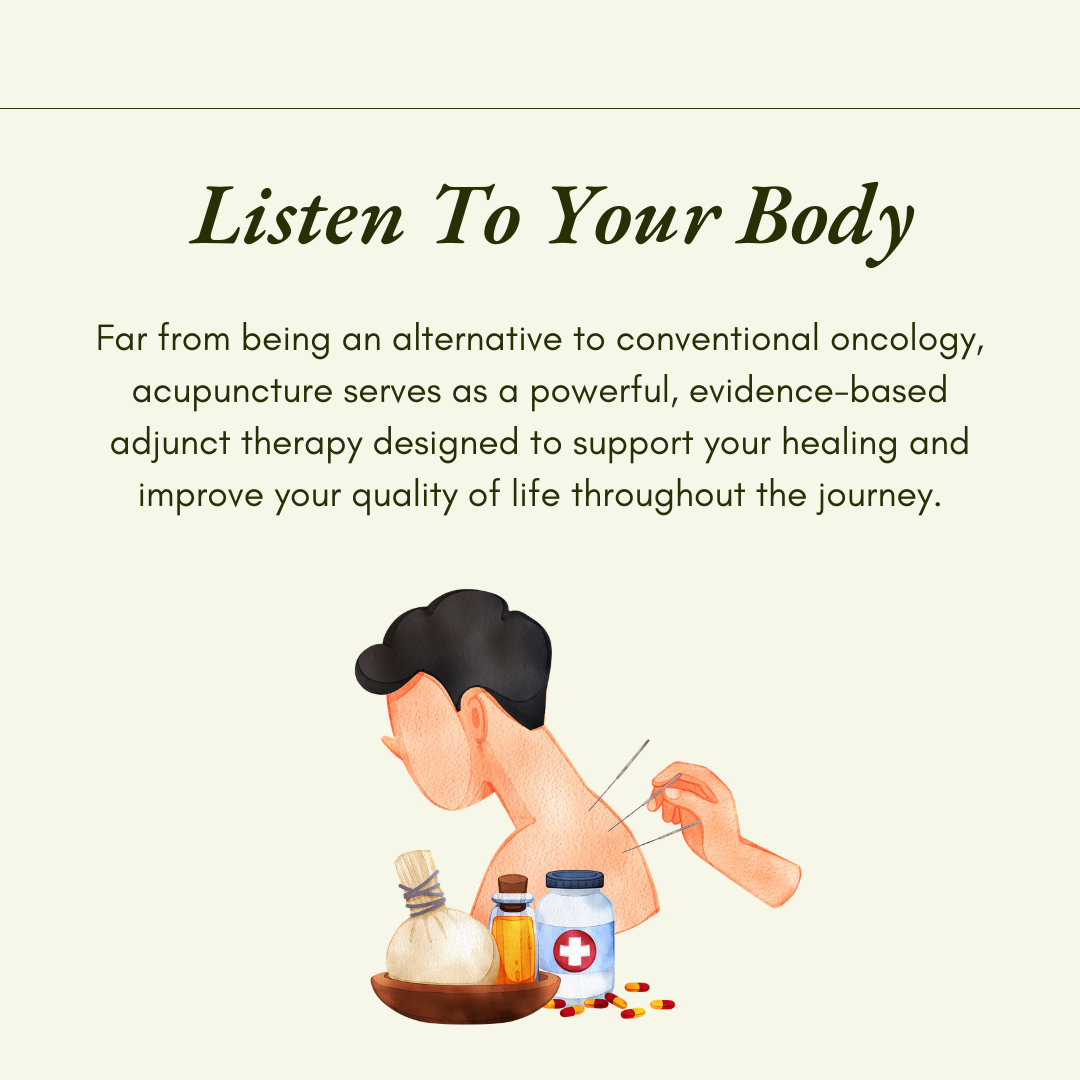
As licensed medical professionals, we frequently meet patients who are looking for ways to rebuild their strength, manage distressing side effects, and regain a sense of control over their health. This is where acupuncture steps in. Far from being an alternative to conventional oncology, acupuncture serves as a powerful, evidence-based adjunct therapy designed to support your healing and improve your quality of life throughout the journey.
Defining Our Role: Support, Not a Substitute
Before diving into how acupuncture can help, it is incredibly important to establish what acupuncture cannot do.
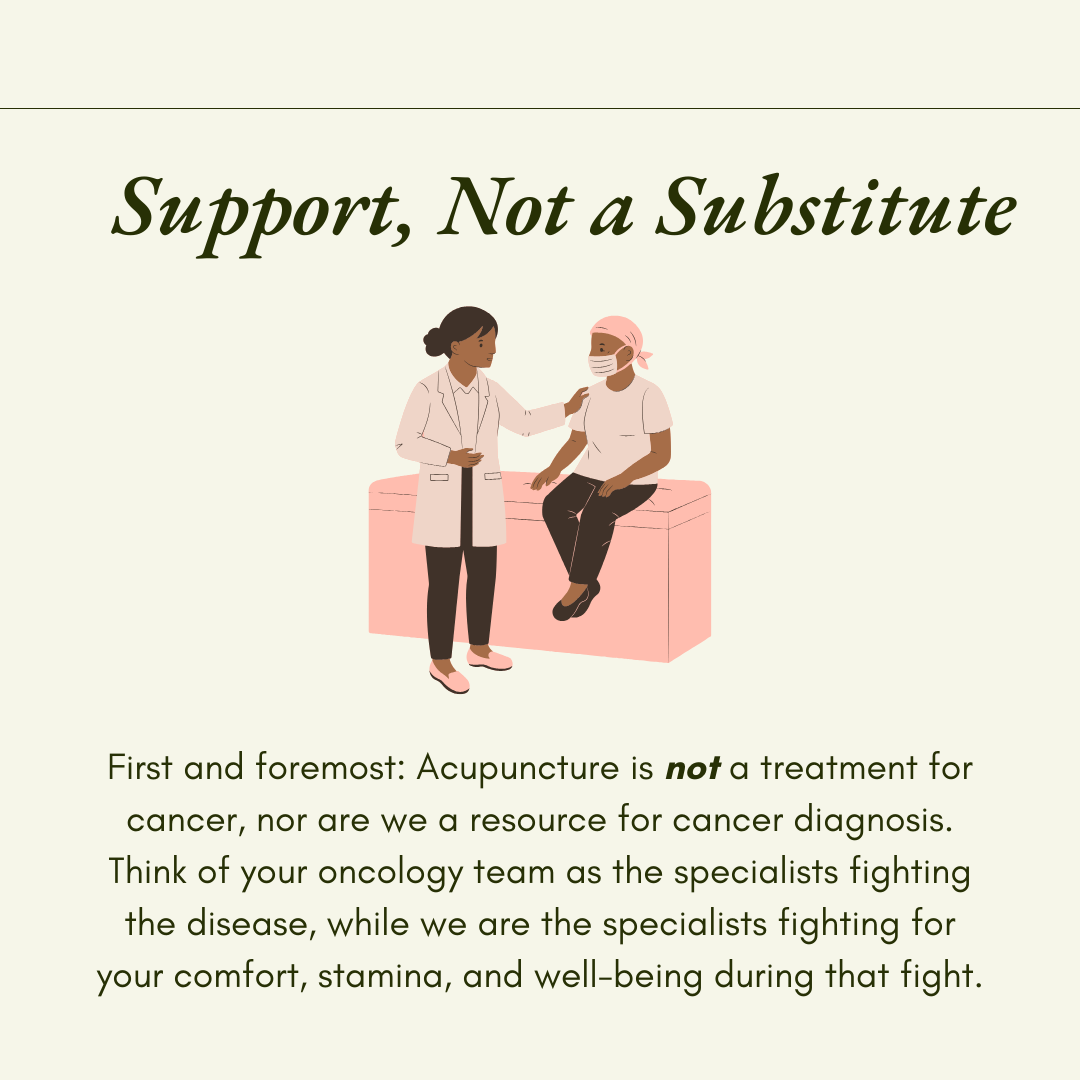
First and foremost: Acupuncture is not a treatment for cancer, nor are we a resource for cancer diagnosis. We are not a primary source of cancer care. We do not treat tumors, stop the spread of disease, or replace the essential work of your oncological team. We strongly encourage and require all of our patients to seek and maintain proper medical care from qualified oncologists, surgeons, and primary care physicians.
Instead, our role is purely supportive. Think of your oncology team as the specialists fighting the disease, while we are the specialists fighting for your comfort, stamina, and well-being during that fight. We are highly experienced in safely navigating the complexities of a cancer journey, working alongside your conventional treatments to help you tolerate them better.
How Acupuncture Enhances Quality of Life During Cancer Care
Cancer and its treatments can trigger a cascade of physical and emotional symptoms. Acupuncture works by stimulating specific points on the body, triggering the release of natural endorphins, regulating the nervous system, and promoting blood circulation.
Here are several key areas where acupuncture can offer meaningful relief:
What Can Acupuncture Help With?
Numerous research studies have looked at how acupuncture may help support those going through cancer treatment and found many areas where the evidence is clear: Acupuncture can help with that.
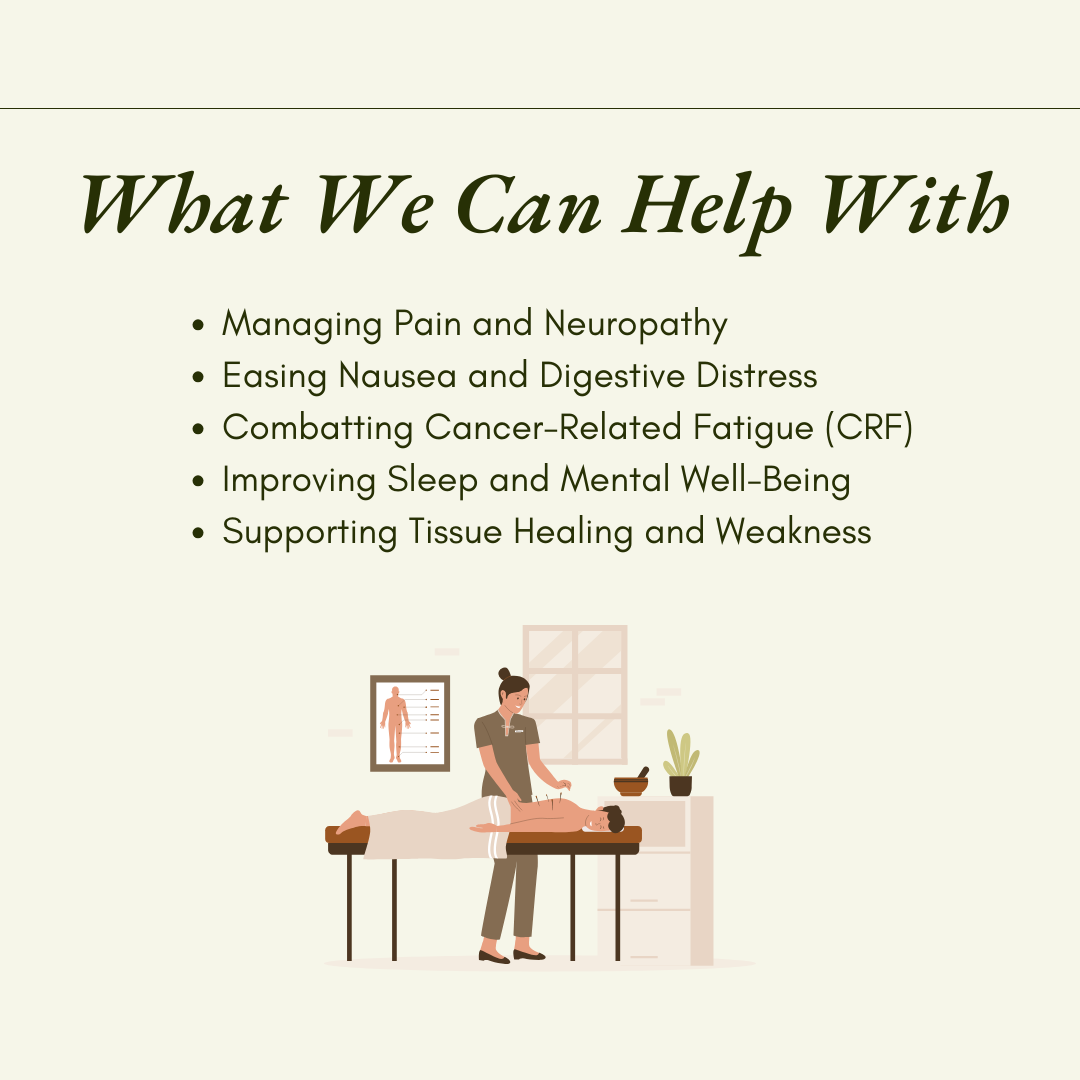
1. Managing Pain and Neuropathy
Whether it is surgical post-operative pain, deep bone pain from certain medications, or peripheral neuropathy (numbness and tingling in the hands and feet) caused by chemotherapy, acupuncture is widely recognized for its analgesic properties. By reducing inflammation and altering how pain signals are processed in the brain, it can help lessen your reliance on heavy pain medications.
2. Easing Nausea and Digestive Distress
Chemotherapy-induced nausea and vomiting (CINV) can severely impact your ability to maintain proper nutrition. Acupuncture has been heavily researched and is recommended by major oncology organizations worldwide for its ability to significantly reduce nausea and settle the stomach.
3. Combatting Cancer-Related Fatigue (CRF)
The exhaustion that accompanies cancer isn't a normal tiredness that goes away with a good night's sleep; it is a profound, systemic depletion. Acupuncture helps gently boost energy reserves, regulate cellular metabolism, and give patients the stamina they need to complete their scheduled medical treatments.
4. Improving Sleep and Mental Well-Being
The anxiety, fear, and stress of a cancer diagnosis naturally disrupt your sleep architecture. By shifting the body out of a stressed "fight-or-flight" mode and into a restful "rest-and-digest" state, acupuncture promotes deeper, more restorative sleep, which is fundamental for cellular repair.
5. Supporting Tissue Healing and Weakness
Cancer treatments can leave the body feeling physically weak and can sometimes compromise the immune system, leading to slow-healing or unhealing wounds. Acupuncture encourages localized blood flow and microcirculation, delivering essential nutrients and oxygen to tissues that need to rebuild, while helping to stabilize overall physical strength.

A Safe, Collaborative Approach to Your Care
If you or a loved one is currently navigating a cancer diagnosis, you do not have to endure the side effects alone. When applied by trained, licensed professionals, acupuncture is incredibly safe, minimally invasive, and can be customized to exactly where you are in your treatment cycle—whether you are preparing for surgery, in the middle of chemotherapy, or in the recovery phase.
Our goal is simple: to wrap a layer of comfort and resilience around you so that you can face your medical treatments with strength, dignity, and a higher quality of life.
If you would like to discuss how we can collaborate with your existing oncology team to support your wellness journey, please reach out to us at 865.315.3157 or info@maryvilleacupuncture.com schedule a consultation. To schedule online, please click here.